10 Common Myths About Shark Cage Diving in South Africa (Debunked)
Shark cage diving is one of South Africa’s most recognised marine wildlife experiences, yet it remains surrounded by misconceptions.
Some people believe the activity is extremely dangerous. Others assume sharks are aggressive towards humans, that cages attract attacks or that every trip guarantees an encounter with a great white shark.
These beliefs are often influenced by films, dramatic news coverage and outdated information rather than an understanding of how shark cage diving actually works.
For visitors considering shark cage diving Cape Town, separating fact from fiction is an important part of planning the experience.
Modern shark diving is conducted through structured marine operations that combine safety procedures, experienced crews and responsible wildlife observation.
However, sharks remain wild animals, and ocean conditions are never completely predictable.
Here are ten common myths about shark cage diving in South Africa, along with the facts every visitor should understand.
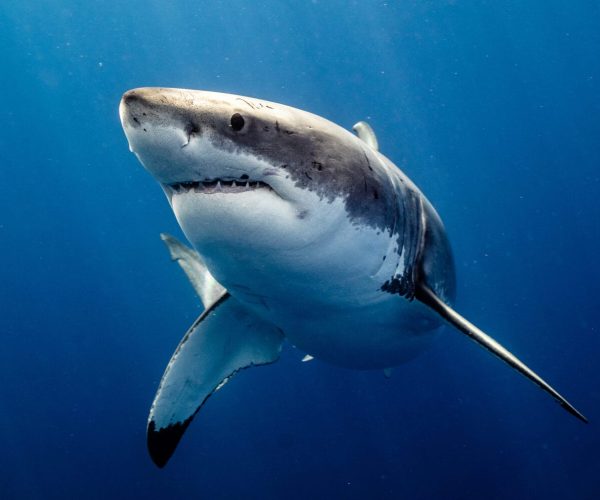
Myth 1: Shark Cage Diving Is Extremely Dangerous
The reality: Shark cage diving involves risks, but professional operators use established safety procedures to manage them.
One of the biggest misconceptions is that entering a cage near sharks means placing yourself in immediate danger.
In practice, professional cage diving experiences are carefully organised.
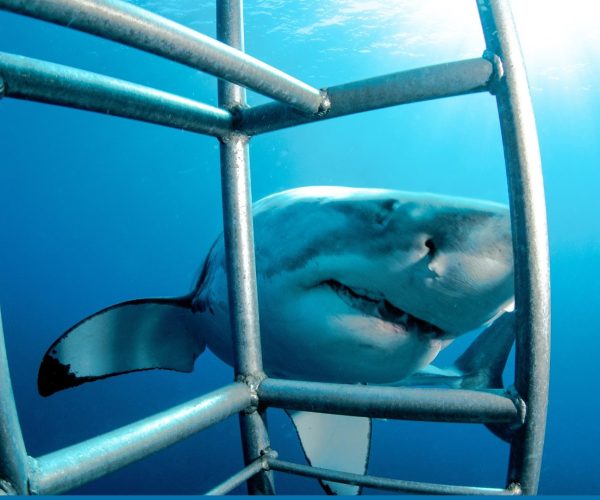
Guests receive safety briefings, are supervised by crew members and enter a cage specifically designed for marine wildlife observation.
The cage provides a physical barrier between participants and sharks.
Operators must also consider weather conditions, vessel safety and emergency procedures.
No marine activity is completely risk-free, and it would be misleading to claim otherwise.
However, the controlled structure of a professional cage diving operation is very different from swimming freely in open water around sharks.
Our detailed shark diving safety guide explains the procedures and practical considerations in greater detail.
Myth 2: Sharks Are Always Aggressive Towards Humans
The reality: Sharks do not spend their lives searching for people to attack.
Sharks are predators, but their behaviour is often misunderstood.
Most shark species feed primarily on fish, squid, rays or marine mammals, depending on the species.
Humans are not a normal prey item for most sharks.
When sharks approach a vessel, their behaviour may be investigative rather than aggressive.
Bronze whaler sharks, for example, are often observed swimming around boats and examining their surroundings.
This behaviour can provide excellent viewing opportunities, but it should not be confused with aggression.
Sharks are powerful wild animals and must always be treated with respect.
Understanding their natural behaviour is one of the most valuable aspects of responsible shark diving.
Visitors interested in learning more can explore our collection of shark facts.
Myth 3: Every Shark Diving Trip Includes Great White Sharks
The reality: Great white shark sightings have become much less common in several traditional South African shark diving areas.
For decades, great white sharks were closely associated with Cape Town and Gansbaai.
False Bay became internationally famous for great white shark hunting behaviour around Seal Island.
However, shark populations and their distribution have changed.
Great white shark sightings in False Bay are now considerably less frequent than they were during the area’s peak years of observation.
Today, bronze whaler sharks are among the large shark species commonly encountered during cage diving trips.
Other sharks occur throughout the wider marine ecosystem, although not all are routinely encountered on standard excursions.
This does not make the experience less valuable.
Observing a bronze whaler shark in its natural habitat provides an opportunity to learn about a species that plays an important role in South Africa’s coastal ecosystems.
Our guide to sharks you can see while diving in Cape Town explains the different species and their habitats.
Myth 4: You Must Be an Experienced Scuba Diver
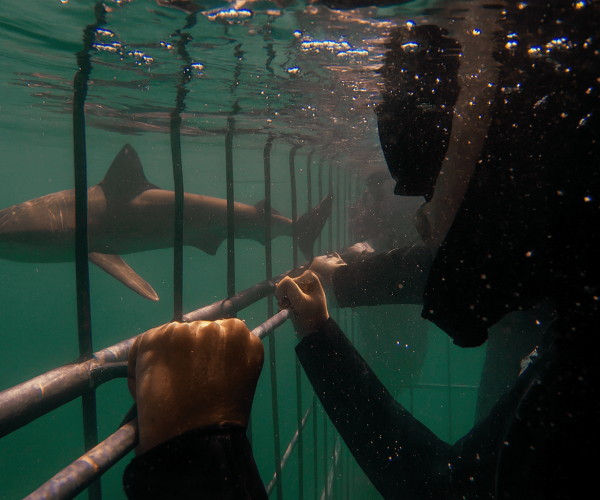
The reality: Most standard shark cage diving experiences do not require scuba certification.
Many first-time visitors assume they need advanced swimming or diving skills.
However, standard surface cage diving generally does not involve independent scuba diving.
The cage remains secured to the vessel, and guests enter under crew supervision.
Depending on the operator and equipment used, participants may observe sharks while holding their breath briefly below the surface.
The crew explains how the equipment works and what guests should do throughout the experience.
Swimming ability, age restrictions and health requirements can vary between operators.
Anyone with concerns should confirm the participation requirements before booking.
For many guests, shark cage diving is their first experience observing large marine predators underwater.
Myth 5: Shark Cage Diving Encourages Sharks to Attack People
The reality: There is no established evidence that properly managed shark cage diving causes sharks to target humans generally.
This concern is often linked to the use of attractants.
Some operations use scent-based attractants or other permitted methods to bring sharks within viewing distance.
Critics question whether these practices could influence shark behaviour.
This is a legitimate scientific issue, and the effects can depend on the species, location, methods used and duration of exposure.
Research has documented short-term behavioural responses to tourism activity in some settings. However, this does not establish that shark cage diving causes sharks to attack swimmers or beachgoers.
Responsible operators follow applicable permit conditions and wildlife interaction requirements designed to limit unnecessary impacts.
For a broader discussion of the environmental questions, read our article on the ethics of shark cage diving.
Myth 6: Shark Cage Diving Is Bad for Shark Conservation
The reality: Responsible shark tourism can support conservation awareness, but the benefits depend on how it is managed.
Wildlife tourism can influence how people perceive animals.
Sharks are frequently portrayed as dangerous or threatening, despite their important ecological role.
Observing sharks in the wild can challenge these assumptions.
Guests often learn about shark behaviour, marine ecosystems and the threats facing shark populations.
These threats include overfishing, accidental capture, habitat degradation and environmental change.
Responsible shark tourism can also support local employment and create opportunities for conservation education.
However, tourism should not automatically be described as beneficial simply because it involves wildlife.
The quality of the operation, its environmental practices and its contribution to conservation all matter.
Our article on shark diving and marine research explores these issues further.
Myth 7: Sharks Attack the Cage Throughout the Trip
The reality: Sharks generally swim around the vessel and cage rather than repeatedly attacking them.
Dramatic footage can create the impression that sharks spend their time crashing into cages.
In reality, many shark encounters involve animals swimming past the cage, changing direction or approaching to investigate.
Occasional contact can occur, which is one reason cages are built to withstand the marine environment and possible interactions with large animals.
Professional crews monitor shark behaviour and supervise guests throughout the activity.
Participants are instructed to keep their hands and other body parts inside the cage.
Following these instructions is an important part of the experience.
The goal is to observe sharks, not provoke interactions.
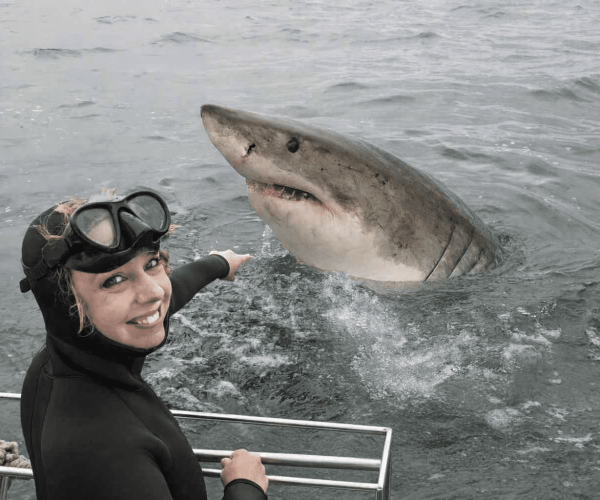
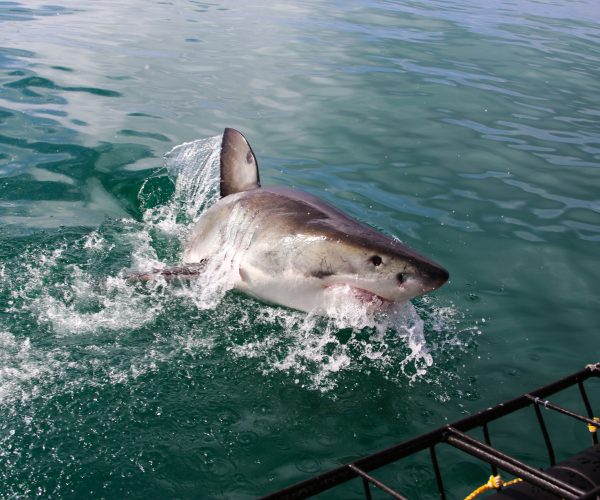
Myth 8: Shark Cage Diving Is Only Worthwhile During Great White Shark Season
The reality: Shark diving can offer valuable wildlife encounters without great white sharks.
Great white sharks have historically attracted considerable attention, but South Africa supports many other shark species.
In Cape Town, bronze whaler sharks provide opportunities for close observation during suitable conditions.
Other species inhabit kelp forests, reefs, coastal waters and offshore environments.
The exact animals encountered depend on the type of expedition, location and season.
Shark diving also offers opportunities to learn about the wider marine ecosystem.
Guests may observe seals, seabirds and other marine wildlife during their trip.
Rather than focusing exclusively on one species, it is more useful to understand which sharks are currently being encountered at your chosen destination.
For additional information, browse our shark species guide.
Myth 9: Cape Town and Gansbaai Offer Exactly the Same Experience
The reality: Cape Town and Gansbaai have different marine environments and travel logistics.
Although both destinations are associated with shark cage diving, they are geographically distinct.
Apex Shark Expeditions operates in Cape Town, with trips departing from Simon’s Town into False Bay.
False Bay is known for its marine biodiversity, shark research history and established wildlife tourism industry.
Gansbaai is located in the Overberg region of the Western Cape.
The area has its own shark diving history, marine habitats and operating conditions.
For visitors staying in Cape Town, False Bay can offer a more convenient experience because it does not require travelling to the Overberg.
Travellers already visiting Hermanus or Gansbaai may prefer the latter.
Both locations can provide rewarding encounters, but wildlife sightings and operating conditions vary.
Our shark cage diving Gansbaai guide provides further information about planning a trip in the Overberg.
Myth 10: Shark Sightings Are Guaranteed
The reality: No responsible wildlife operator can guarantee that sharks will appear.
Sharks are wild animals that move freely through the ocean.
Their behaviour is influenced by factors such as water temperature, currents, prey availability, weather and seasonal movement.
Experienced operators use local knowledge and observations to select appropriate operating areas.
However, even extensive experience cannot control wildlife.
Some trips may provide multiple sightings, while others may have limited shark activity.
This uncertainty is a normal part of marine wildlife tourism.
When booking, visitors should check the operator’s policies regarding unsuccessful sightings, weather cancellations and rescheduling.
Clear expectations help guests make informed decisions.
What Should You Expect During a Shark Cage Diving Trip?
Understanding the experience before departure can help reduce unnecessary concerns.
A typical trip begins with a safety briefing.
Crew members explain the operating procedures, how to enter the cage and what to expect during the expedition.
The boat then travels to the designated operating area.
Once conditions are suitable, guests enter the cage in supervised groups.
The cage remains attached to the vessel, and crew members monitor activity throughout the session.
Depending on shark behaviour and conditions, guests may have opportunities to observe animals from both the cage and the boat.
After the wildlife encounter, the vessel returns to harbour.
Trip duration and exact procedures vary, so visitors should review the details of their chosen expedition before booking.
Our ultimate Cape Town shark cage diving guide provides further information about preparing for the experience.
How to Choose a Responsible Shark Diving Operator
Choosing the right operator can make a significant difference to the experience.
Rather than selecting a trip based only on price, visitors should consider the operator’s experience, safety procedures and approach to marine wildlife.
An established operator should be able to explain its safety practices, participation requirements and wildlife interaction procedures.
Visitors should also understand what is included in the booking price.
Some of the most important considerations are crew experience, equipment, communication before departure and how the operator handles unsuitable weather.
At Apex Shark Expeditions, our experience operating in False Bay informs how we plan trips, communicate with guests and approach marine wildlife encounters.
For more information about our operating philosophy, visit why choose Apex Shark Expeditions.
Frequently Asked Questions
Is shark cage diving safe for beginners?
Standard cage diving is designed to accommodate many first-time participants. Guests receive safety instructions and remain under crew supervision. Individual participation requirements should be confirmed with the operator.
Can you go shark cage diving without knowing how to swim?
Some surface cage diving experiences do not require strong swimming ability. Requirements vary, so guests should confirm them before booking.
Are great white sharks still found in Cape Town?
Yes, although sightings in False Bay have become much less frequent than in previous decades.
What sharks are most commonly seen during Cape Town cage diving?
Bronze whaler sharks are among the large shark species commonly encountered during current Cape Town cage diving operations.
Does shark cage diving harm sharks?
The impact depends on operating methods and wildlife interaction practices. Responsible operators follow applicable regulations and aim to minimise unnecessary disturbance.
When is the best time to go shark cage diving in Cape Town?
The best time depends on weather conditions, the species you hope to encounter and current shark activity. Check with the operator for recent sightings and seasonal guidance.
Final Thoughts
Shark cage diving in South Africa is often misunderstood because public perceptions of sharks do not always reflect their natural behaviour.
The experience is not about provoking dangerous animals or guaranteeing dramatic encounters.
It is about observing sharks in their natural habitat through a structured wildlife activity.
Understanding the facts helps visitors make informed decisions about safety, conservation, wildlife sightings and operator selection.
For travellers planning shark diving in Cape Town, Apex Shark Expeditions offers the opportunity to experience False Bay with an established local operator.
Our approach combines decades of experience with marine education, responsible wildlife interaction and clear communication about what guests can expect.
Explore our shark cage diving prices in Cape Town or learn more about Apex Shark Expeditions before planning your trip.