

How Safe Is Shark Cage Diving in Cape Town? Data, Not Myths
Shark cage diving is one of the most talked-about wildlife experiences in South Africa. For some people, it sits at the top of their travel bucket list. For others, the idea of entering the water near sharks raises obvious questions about safety.
Many of these concerns are driven by movies, media headlines, and misconceptions about shark behaviour rather than facts.
The reality is that modern shark cage diving operates within a highly structured environment that prioritises safety, professional procedures, and risk management. Like any outdoor activity, there are risks, but understanding the data and how the industry operates provides a much clearer picture than popular myths.
This article examines the safety of shark cage diving in Cape Town, how operators manage risk, and what visitors should realistically expect.


Why Shark Cage Diving Looks More Dangerous Than It Is
Sharks are often portrayed as unpredictable predators that pose a constant threat to humans.
In reality, sharks are wild animals that spend very little time interacting with people.
Most visitors only ever see sharks through television programmes, movies, or social media clips. These often focus on dramatic footage rather than everyday shark behaviour.
When people arrive for shark diving Cape Town experiences, they are often surprised by how structured and controlled the operation actually is.
The gap between perception and reality is one of the biggest reasons shark cage diving generates so many questions about safety.
Understanding the Purpose of the Cage
The most obvious safety measure is the cage itself.
The cage is specifically designed to provide a physical barrier between participants and sharks while allowing close observation of the animals in their natural environment.
Professional shark diving cages are:
- Constructed from strong marine-grade materials
- Attached securely to the vessel
- Regularly inspected
- Designed to withstand marine conditions
- Operated according to safety procedures
The cage is not simply a tourism feature. It is a carefully engineered safety system.
How Shark Cage Diving Works
Understanding the process helps explain why shark diving has become such a widely accepted activity.
A typical trip follows a structured format:
Arrival and Briefing
Guests arrive at the departure point and receive an introduction to the day.
The crew explains:
- Safety procedures
- Ocean conditions
- Equipment usage
- What to expect during cage rotations
Travel to the Dive Site
The vessel travels to the operating area in False Bay.
Because Cape Town shark diving operates from within the city through Simon’s Town, travel times are generally manageable.
Visitors can view a typical trip structure through the great white False Bay morning trip.
Cage Rotations
Guests enter the cage in small groups.
The cage remains attached to the boat throughout the experience.
Crew members supervise all activity while monitoring both guests and shark behaviour.
Return to Harbour
Once the session is complete, the vessel returns to shore.
The process is designed to remain structured from beginning to end.
What the Data Tells Us
When discussing safety, data is far more useful than anecdotes.
Professional shark diving has operated in South Africa for decades.
During this time:
- Thousands of trips have been conducted
- Tens of thousands of guests have entered cages
- Safety procedures have continually evolved
- Equipment standards have improved
The industry’s long operational history is one of the strongest indicators of its safety record.
This does not mean risk is zero. No ocean activity can make that claim.
However, it does demonstrate that shark cage diving is managed in a way that allows it to operate consistently over long periods.
Understanding Risk in Ocean Activities
It is important to place shark diving into context.
Many common travel activities carry risk, including:
- Hiking
- Swimming
- Driving
- Surfing
- Boating
The ocean itself introduces variables such as weather, waves, and visibility.
Professional operators focus on managing these variables through:
- Weather assessments
- Vessel maintenance
- Crew training
- Safety protocols
- Guest briefings
Risk management is the foundation of modern shark diving operations.
The Importance of Experienced Operators
Experience matters.
Long-term operators understand:
- Seasonal ocean conditions
- Shark behaviour patterns
- Vessel handling
- Emergency procedures
- Guest management
This knowledge improves both safety and overall experience quality.
Visitors can learn more about professional standards through why choose Apex Shark Expeditions.
Shark Behaviour Is Often Misunderstood
One of the biggest myths surrounding shark diving is that sharks constantly behave aggressively around boats.
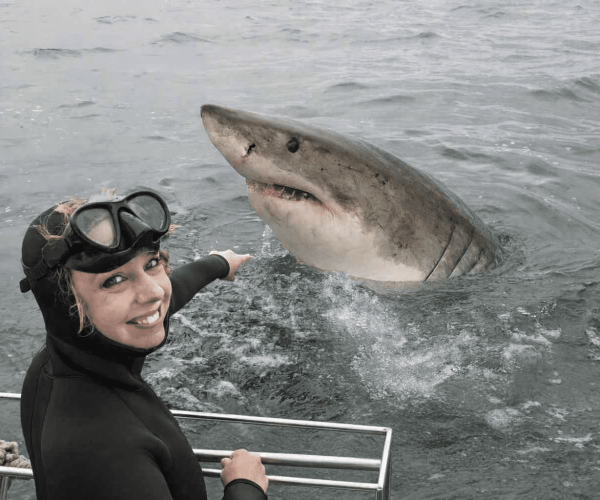
In reality, sharks are often cautious and investigative.
Research conducted in False Bay and elsewhere has shown that shark behaviour is influenced by:
- Environmental conditions
- Water temperature
- Visibility
- Prey availability
- Seasonal movement
Understanding these factors allows experienced operators to manage trips more effectively.
For those interested in learning more, the shark facts page and shark species guide provide useful background information.
Why Professional Briefings Matter
Safety starts long before anyone enters the water.
A thorough briefing ensures that guests understand:
- How the cage works
- How to enter safely
- How to position themselves
- How to respond to crew instructions
Many first-time participants arrive feeling nervous and leave feeling much more confident after understanding the process.
Knowledge reduces uncertainty.
Common Concerns from First-Time Guests
“What If a Shark Hits the Cage?”
Sharks are powerful animals, which is why cages are built specifically for this environment.
Occasional contact may occur, but the cage is designed with this possibility in mind.
“What If I Cannot Swim Well?”
Many shark diving experiences do not require advanced swimming ability.
Participants wear flotation equipment and remain within a controlled environment.
“What If I Panic?”
Crew members are trained to assist guests who feel uncomfortable.
Participation is voluntary, and guests can leave the cage if needed.
“What If the Weather Changes?”
Professional operators continuously monitor conditions.
Trips may be delayed, modified, or cancelled if conditions are not suitable.
Cape Town’s Advantage
Cape Town offers several operational advantages.
Because trips operate from within the city through False Bay, operators benefit from:
- Accessible launch locations
- Consistent logistics
- Strong tourism infrastructure
- Long-term operational experience
These factors help support a well-established shark diving industry.
Cape Town vs Gansbaai
Many visitors compare Cape Town and Gansbaai when researching shark diving.
Cape Town offers:
- Shark diving within the city
- Half-day trip options
- Easier travel logistics
Gansbaai offers:
- A location in the Overberg region
- Full-day experiences
- Different marine conditions
Visitors interested in comparing destinations can explore shark cage diving Gansbaai.
Both locations operate within regulated frameworks designed to prioritise safety.
The Role of Regulation
South Africa’s shark diving industry operates under regulations that help maintain standards.
These include:
- Vessel requirements
- Permit conditions
- Wildlife interaction guidelines
- Safety procedures
- Environmental responsibilities
Regulation helps create consistency across the industry.
Why Education Improves Safety
One of the most valuable aspects of shark diving is education.
Guests learn:
- How sharks behave
- Why sharks are important
- How marine ecosystems function
- What conservation challenges exist
This knowledge often replaces fear with understanding.
Many people leave with a very different perspective from the one they had before entering the water.
Safety Beyond the Cage
Safety extends beyond the cage itself.
Professional operators invest in:
- Crew training
- Vessel maintenance
- Communication systems
- Emergency planning
- Continuous improvement
These systems work together to create a comprehensive approach to risk management.
What Visitors Can Do to Improve Their Experience
Guests also play a role in ensuring a smooth trip.
Simple steps include:
- Following crew instructions
- Arriving well-rested
- Taking motion sickness medication if needed
- Wearing appropriate clothing
- Listening carefully during briefings
Prepared guests tend to enjoy the experience more fully.
Final Thoughts
Shark cage diving in Cape Town is often perceived as more dangerous than it actually is.
The reality is that modern shark diving is built around structure, professional procedures, experienced crews, and carefully designed safety systems.
No outdoor activity is completely without risk, particularly in the ocean. However, decades of operation, ongoing regulation, and continued improvements have helped establish shark diving as a well-managed wildlife experience.
For travellers seeking a close encounter with one of the ocean’s most fascinating animals, shark diving Cape Town offers a combination of adventure, education, and professional safety standards.
When viewed through the lens of facts rather than myths, shark cage diving becomes far less about fear and far more about understanding the marine world.
Book your shark cage diving Cape Town tour today.