Great White vs Tiger Shark: Which Dive Offers More Thrill?
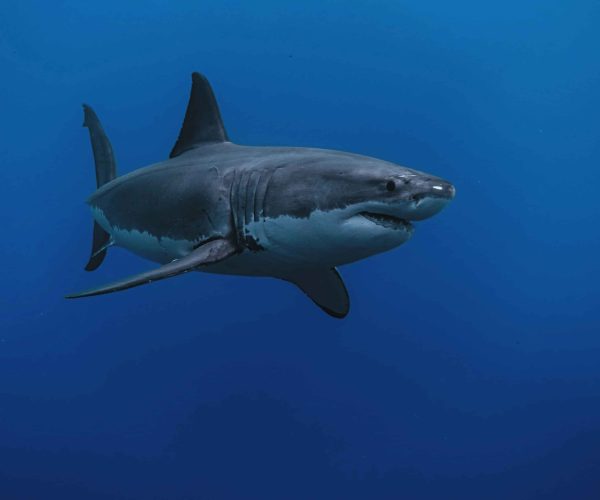
Great White Shark (Carcharodon carcharias) is perhaps the most iconic shark on the planet. Adults commonly reach 4–6 meters (13–20 ft) in length, with some nearing the upper bound of 6.4 m.
Their build is streamlined — torpedo-shaped body, powerful crescent tail — built for bursts of speed and precision ambushes.
Their coloration — a greyish dorsal side and bright white underside — provides classic camouflage: invisible from above and below in open water.
Under the surface, great whites wield serrated, triangular teeth in multiple rows, optimized for tearing flesh from large prey like seals or sea lions. Their reputation is bolstered not just by size, but by sheer predatory power.
Conservation-wise, great whites are listed as Vulnerable globally on the International Union for Conservation of Nature (IUCN) Red List — their populations have declined substantially over time, largely due to fishing, bycatch, and habitat pressures.
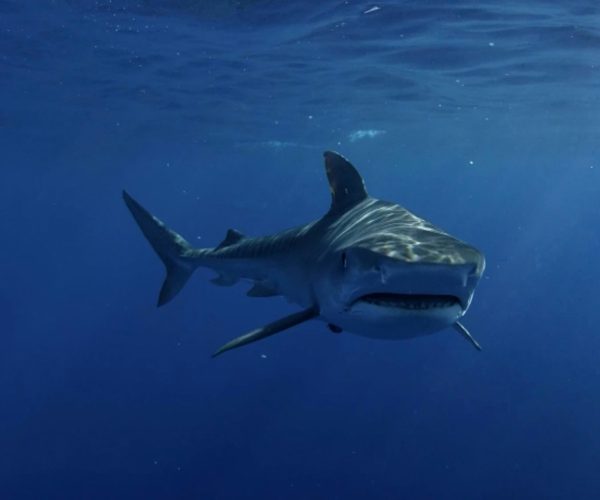
Tiger Shark (Galeocerdo cuvier) — the name is a giveaway. Young tigers sport vertical “tiger-stripe” markings down their bluish-grey backs, though these fade with age. Tiger sharks are slightly shorter on average — often 3–4 m (10–14 ft) — though large specimens may reach 5 m+. Their snout is blunt and broad, their body more robust than a great white’s streamlined form, with powerful jaws and curved, serrated teeth built for a broad diet.
What stands out about tiger sharks is their omnivorous, opportunistic feeding habit. Their diet spans sea turtles, birds, fish, squid — even inedible items like old tires or license plates have been found in their stomachs. That “anything goes” appetite makes them unpredictable and fascinating.
Globally, tiger sharks are listed as Near Threatened by the IUCN due to fishing pressure, finning, bycatch, and habitat degradation.
Book your Cape Town Shark Tour today.
Behaviour & What Makes Them Unique
- Hunting style & prey selection: Great whites are specialized apex predators targeting marine mammals and relying on stealth and speed, while tiger sharks are culinary generalists — scavengers and hunters who’ll eat almost anything.
- Teeth and jaws: Great whites have triangular, serrated teeth perfectly designed for large chunks; tiger sharks’ curved teeth enable shell-crushing and broad diet adaptability.
- Behaviour around humans: Both are potentially dangerous — tiger sharks are often described as more unpredictable, while great whites are more selective and cautious; many human attacks are believed to stem from mistaken identity (e.g., surfers resembling seals).
- Conservation context: Neither species is invincible — both face pressure from fisheries, habitat loss, and declining prey populations. Conservation-minded divers must weigh thrill against responsibility.
Dive Experience: Cage Diving vs Open Reef Dives
Great White – Cage Diving in South Africa
If you head to the Cape — especially around Gansbaai (a 2.5 h drive from Cape Town) — the go-to activity is cage diving. Operators like ApexPredators.com highlight that their cages are built with certified 12 mm galvanized steel, inspected annually, complying with regulations to ensure diver safety.
- No diving license required: These dives use a surface-hang cage system — you need only basic swimming/snorkel skills.
- Encounters: On a good day, divers might encounter several great whites — reports mention up to 18 in a day, though 4–5 is more typical.
- Safety record: Over decades of cage diving tourism, serious incidents are extremely rare; fatalities among cage-divers in South Africa are virtually non-existent.
- Thrill factor: There’s something primal about being face-to-face — or eye-to-eye — with the ocean’s top predator. The ambush-style swimming of great whites, their sudden appearances and powerful silhouettes, deliver maximum adrenaline in a controlled, safe environment.
Tiger Shark – Reef & Baited Dives (Eastern & KwaZulu-Natal Coast)
For many divers chasing the “shark thrill,” chasing tiger sharks means heading to the subtropical east coast of South Africa, to dive sites like Protea Banks (KwaZulu-Natal) or Aliwal Shoal.
- No cage needed: Many dives — especially baited dives — are done open water. Divers swim among sharks, rays, tuna, and other big-water life.
- Diverse shark community: On a single dive you might see blacktip sharks, bull (Zambezi) sharks, ragged-tooth sharks, hammerheads — and occasionally tiger sharks around bait.
- Experience: Swimming in open water among wild sharks — often without cages — offers a completely different vibe: raw, under-the-sea, unfiltered. For thrill-seekers who want immersion, it’s hard to beat.